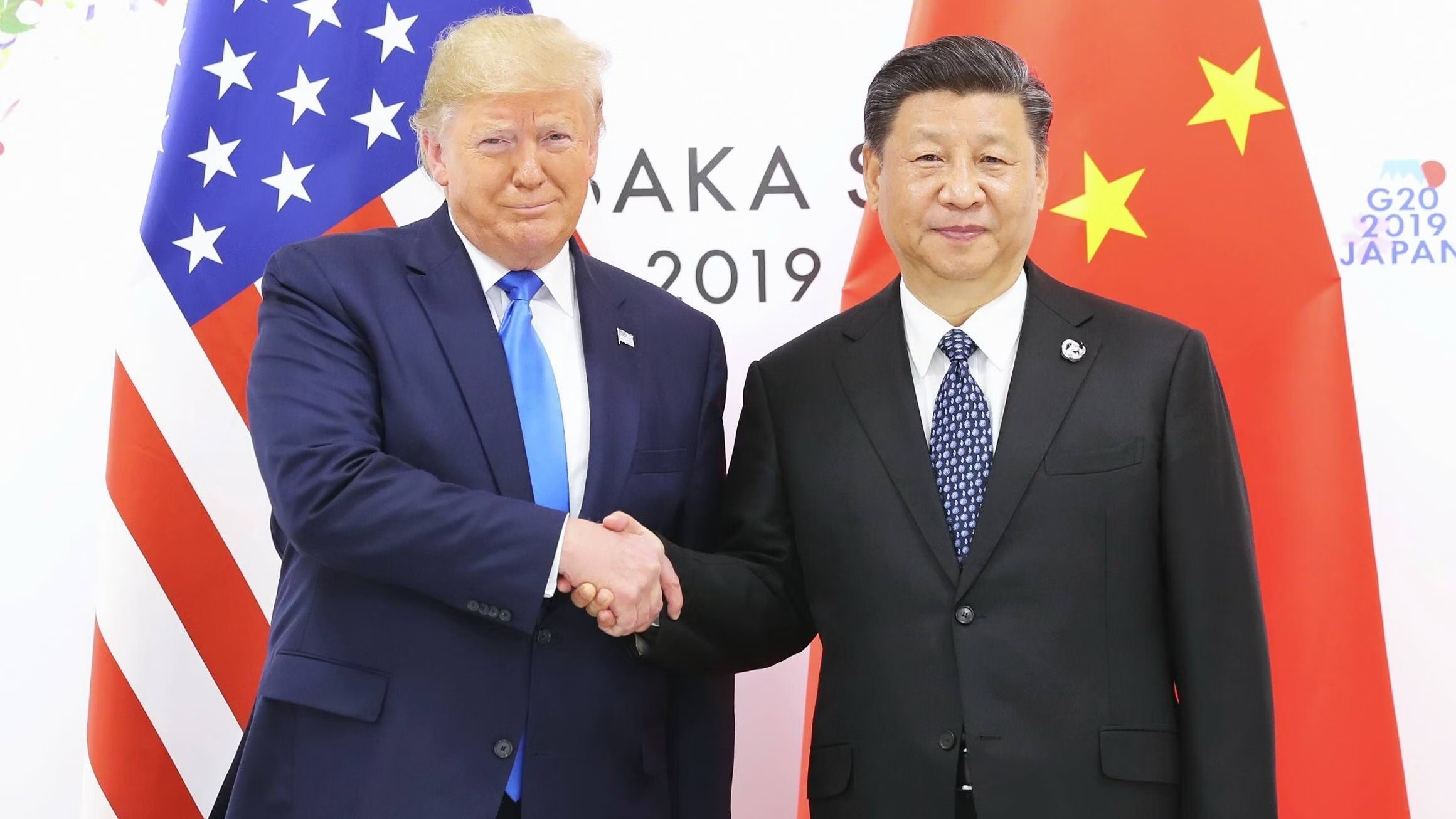
US and Chinese officials began their second day of talks in Stockholm aimed at de-escalating the trade war and resolving long-standing economic disputes. While a major agreement is not expected immediately, it is thought that the two sides may agree to extend the tariff truce reached in May by another 90 days. Furthermore, the talks could pave the way for a summit between US President Donald Trump and Chinese President Xi Jinping.
The talks took place at Rosenbad, the office of the Swedish Prime Minister, and lasted more than five hours on Monday.
U.S. Treasury Secretary Scott Bessent arrived in Rosenbad on Tuesday morning after a separate meeting with Swedish Prime Minister Ulf Kristersson. Chinese Vice Premier He Lifeng also attended the meeting. China must reach a permanent tariff agreement by August 12. If no agreement is reached by that date, U.S. tariffs could be increased again, potentially causing chaos in global supply chains. Furthermore, the dispute could escalate into a trade embargo.The Current State of Trade and Challenges
The talks in Stockholm are taking place immediately after Trump’s trade agreements with the European Union and Japan. According to the Financial Times, the US has temporarily paused its technology export restrictions to avoid disrupting talks with China.
However, senators in Washington are drafting legislation targeting China’s human rights and security policies, which could complicate the talks in Stockholm.
Furthermore, Taiwanese President Lai Ching-te is expected to postpone his visit to the US, as this could anger Beijing and jeopardize trade talks.US-China Talks Difficult and Complex
Previous US-China trade talks were held in Geneva and London and focused primarily on lowering tariffs and restoring the flow of rare earth minerals. Analysts say that US-China talks are far more complex and will take more time than talks with other Asian countries.
One of Washington’s key demands is that China change its export-oriented model and shift towards greater domestic consumption. This goal has been a priority for US policymakers for many years.