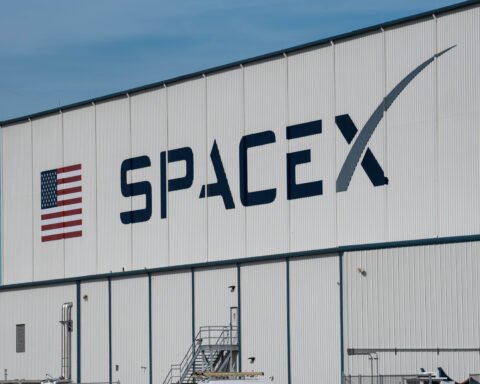
Elon Musk may owe his status as the world’s richest man to Tesla, but his new golden goose is Starlink. The satellite internet service has grown so fast that SpaceX is currently on track to surpass NASA’s annual budget in just one year—a development that drew attention after the White House announced historic budget cuts for the U.S. space agency.
More Revenue Than NASA
Musk recently announced that SpaceX’s revenue from commercial space operations will exceed NASA’s total budget next year. SpaceX, a privately held company controlled by Musk, is not required to publish its financial statements. However, projections expect the company to earn $15.5 billion in 2025. On the other hand, if approved by Congress, NASA’s 2026 budget will be reduced to $18.8 billion; This represents a 24% decrease compared to the previous year.
Starlink Driving the Business
Although SpaceX receives contracts from NASA for projects such as transporting astronauts to the International Space Station and the Starship being developed for the moon, these agreements constitute only a small portion of its revenue. Payments from NASA will be approximately $1.1 billion in 2025. While this figure will rise to $1.747 billion for the Moon to Mars program in 2026, the vast majority of SpaceX’s revenue comes from Starlink.
Starlink currently has over 5 million users, and this number doubles every year.
While residential users form the core, the service has expanded to include maritime (cargo ships, cruise ships), aviation (private and commercial airlines), telecommunications (Direct-to-Cell), and government (particularly the Starshield constellation for the US National Reconnaissance Office). Starlink’s success is largely due to SpaceX’s unique launch capability, particularly with its reusable Falcon 9 rocket. The company completed its 500th mission last night. One specific rocket booster has been launched and landed 28 times, 17 of which were used to launch Starlink satellites. SpaceX’s complete vertical integration sets it apart. It designs and manufactures its own rockets, satellites, and user terminals. Innovation is constant. In late May, a Falcon 9 rocket launched 29 next-generation Starlink V2 Mini Optimized satellites, each 225 kg lighter than previous models and boasting 96 Gbps of bandwidth capacity.How Worth is SpaceX?
With more than 7,000 active satellites in orbit—far more than any other satellite operator—Starlink has valued SpaceX at approximately $350 billion, making it the largest privately held company in the U.S.
As SpaceX reinvests Starlink profits into the Starship program, the line between private enterprise and public space leadership is becoming increasingly blurred. Now the real question is: Who will lead the future of U.S. space exploration—NASA or Elon Musk’s SpaceX?