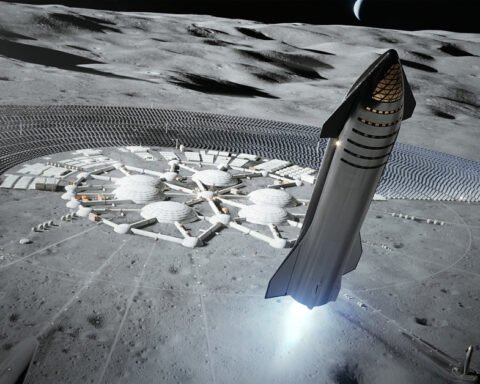
Elon Musk’s decision to merge SpaceX and xAI has reignited a long-standing sci-fi vision: shifting energy-hungry AI computing off Earth and into space. Once the realm of futurists, orbital data centers are now being framed as a plausible next frontier.
For years, engineers have explored whether constant solar power and the vacuum of space could solve the mounting energy and heat problems of terrestrial data centers. The concept has drawn growing interest from Big Tech, but technical and economic barriers kept it largely theoretical—until now.
The merger sharpens investor focus on a tightly integrated ecosystem of rockets, satellites, and AI systems designed to extend computing beyond Earth. It comes as SpaceX prepares for a potential $1.5 trillion IPO, raising expectations that Musk could attempt something unprecedented at scale.
SpaceX has already sought regulatory approval to deploy up to one million solar-powered satellites designed as orbital data centers. In filings, the company outlines an optical-link-driven network capable of space-based computing, though details on launch cadence and full operational scale remain unclear.
Proponents argue that space data centers could ultimately be cheaper, benefiting from uninterrupted solar energy and the ability to radiate heat directly into space. Critics counter that the idea faces formidable risks, including radiation exposure, orbital debris, latency, cooling complexity, and uncertain maintenance costs.
Even supporters caution that commercial viability is likely years away. While the physics are well understood, the economics are not, and the scale required to make such systems profitable remains difficult to model. Still, Musk’s track record keeps skepticism in check.
What sets this effort apart is vertical control. SpaceX commands the world’s most active launch fleet, mass-produces satellites through Starlink, and can funnel demand for low-cost AI compute across Musk-owned platforms—advantages few competitors can match.
The toughest hurdles are technical. AI chips must withstand constant radiation, and cooling them in a near vacuum requires large, costly radiators. Early tests suggest progress is possible, but experts say fully functional space-based data centers are still at least a decade away—a bold bet on both technology and Musk himself.