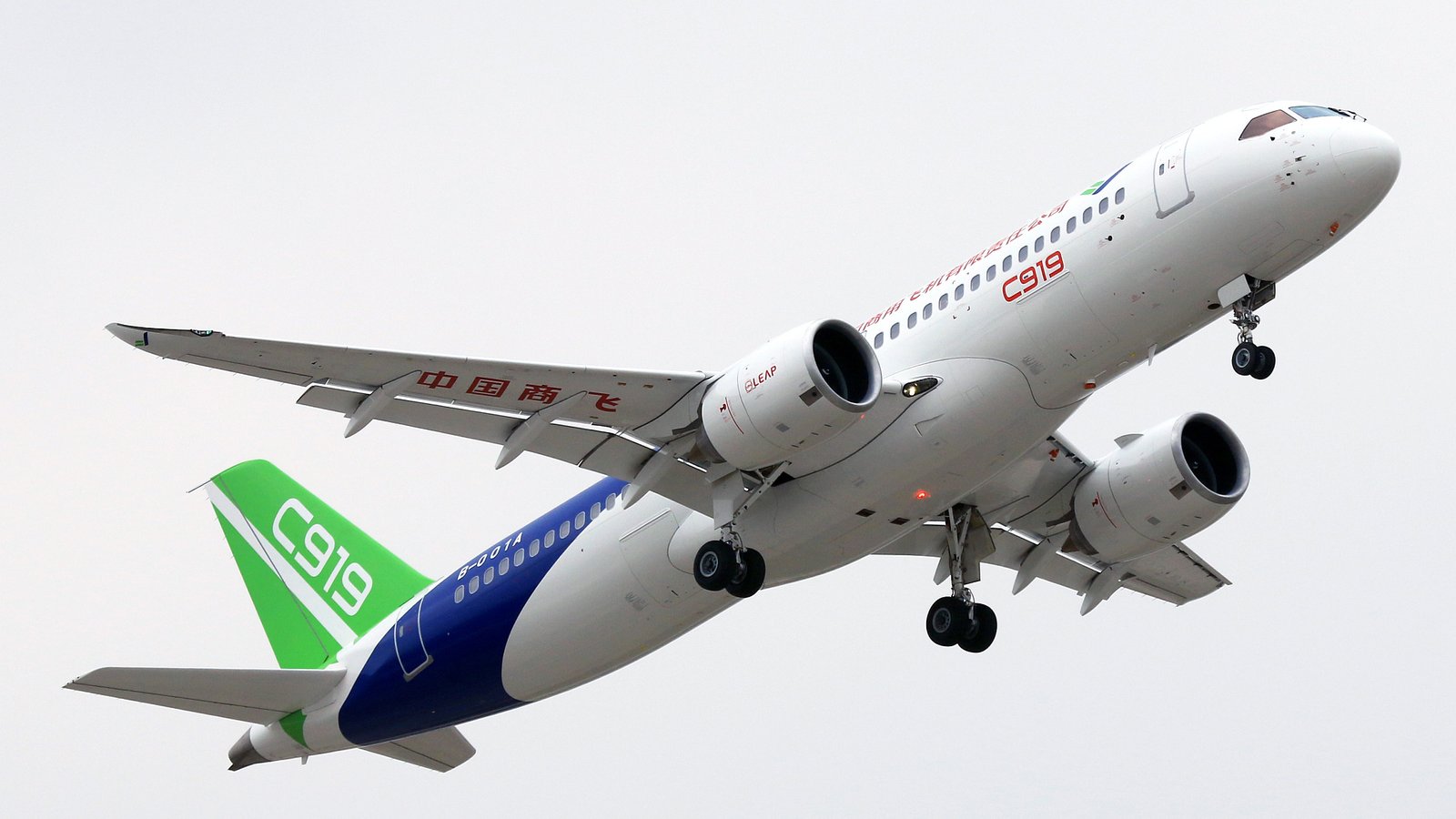
At the Singapore Airshow, amid scale models and mock cockpits from the world’s biggest manufacturers, one exhibitor is drawing growing attention: Comac, China’s state-owned aircraft maker.
Comac has made notable progress since its C919 jet completed its first international flight to Singapore two years ago. Designed to rival the Airbus A320neo and Boeing 737 MAX, the aircraft is now being pitched well beyond China’s domestic market.
The company says it is targeting Southeast Asia, positioning itself as an alternative supplier in the Asia-Pacific region—the world’s fastest-growing aviation market—at a time when airlines are struggling with delivery delays and supply-chain disruptions.
“I think in time, Comac will be a global competitor,” said Willie Walsh of the International Air Transport Association. “Ten to fifteen years from now, we’ll be talking about Boeing, Airbus, and Comac.”
Regional airlines are under pressure as delays at Boeing and Airbus, engine shortages, and broader supply bottlenecks push fleet ages higher and operating costs up. Walsh said Asia-Pacific carriers could see double-digit growth in 2026 if aircraft were available, noting that delivery wait times now average around seven years.
Comac says it has delivered more than 200 C909 and C919 jets, with roughly a quarter operating outside China in markets such as Laos, Indonesia, and Vietnam. Brunei’s GallopAir has placed a large order, while Cambodia plans to acquire around 20 aircraft.
“We need more suppliers,” said Subhas Menon of the Association of Asia Pacific Airlines, describing the industry’s supply chain as effectively an oligopoly. Lower pricing and strong government backing make Comac attractive, particularly for budget carriers.
Challenges remain. European certification for the C919 could stretch into the early 2030s, while maintenance networks, pilot training, and parts integration pose hurdles. Competition also extends beyond Boeing and Airbus, with Embraer gaining traction among regional airlines such as Cebu Pacific, Scoot, and All Nippon Airways—suggesting Comac’s rise will be gradual rather than immediate.