Trump’s ‘Independence Day’ Announcement and a ‘Nightmare’ Day for Global Trade
This day, which Trump declared as “Independence Day,” could actually be the beginning of a period that will largely shape the future of global trade. Unilateral tariffs could lead to the world economy evolving towards a more protectionist and fragmented structure. Tensions between the US, China, Europe, and other major economic powers, which are among the most important actors in global trade, appear to play a decisive role in shaping trade in the coming years.
The question now is how international organizations and economic actors will balance these policies, at what point the uncertainty in the world economy will bottom out, and the effects these developments will have on global growth and employment.
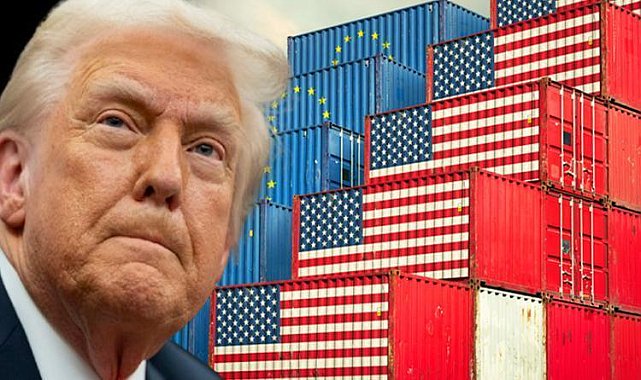
United States President Donald Trump declared April 2, 2025 as “Independence Day” and announced new tariffs that reshape US trade policies. This decision is poised to have a major impact not only on the US economy but on the entire world. Especially during this sensitive period for global trade, Trump’s statement created deep uncertainty in the world economy, and markets reacted quickly.
Trump’s ‘salvation’, world trade’s ‘nightmare’ day
According to Trump’s statement, the new tariffs will cover a value equivalent to approximately 20% of imports into the US. This is a decision of such magnitude that it could affect imports worth approximately $600 billion. The tariffs target products from all over the world, primarily from major trading partners such as China, European Union countries, Japan, and South Korea. Trump is taking this step to protect American producers and support domestic industry. However, such a unilateral trade policy seems likely to lead to reciprocal retaliations.
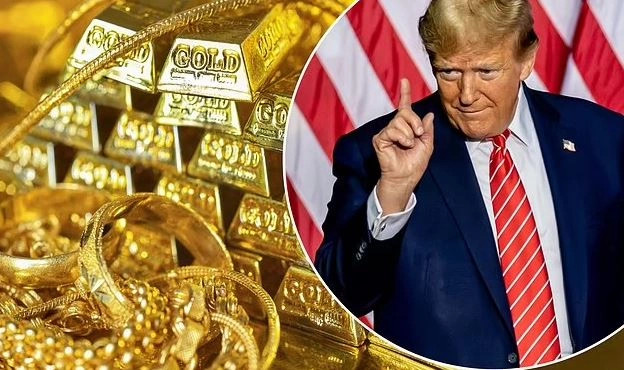
Gold reaches record high before Trump’s ‘Independence Day’
This move by Trump could shake not only the US’s foreign trade relations but also the global economic order. The European Union announced that it plans to implement reciprocal tariffs and take other diplomatic measures in response to this decision. The EU has raised the option of imposing sanctions, particularly in the automotive and technology sectors, in response to US tariff increases.
Global Market Reaction: Volatility and Uncertainty
European Commission President Ursula von der Leyen stated in her statement on this issue that the EU defends the freedom of global trade and that the US increasing tariffs would damage the foundations of international trade. She also stated that Europe is prepared to respond with tariffs and other measures. These statements mean that global trade wars will deepen further, and this will lead to a difficult period not only for trade but for all economic relations.
Global Market Reaction: Volatility and Uncertainty
Following Trump’s statements, world stock markets fluctuated. The US stock market, particularly the S&P 500 index, experienced a drop of up to 1.7% in the morning hours before closing the day with a 0.6% increase. Globally, Asian, European, and emerging market stock exchanges similarly experienced significant fluctuations. This shows that investors are experiencing great uncertainty about how Trump’s new tariffs will affect global economic growth. Experts say that the intensification of trade wars, especially combined with low growth expectations, could further slow down the global economy.
Potential Threats to the Global Economy
New tariffs will have effects not only on trade but also on inflation, production costs, and employment. Increased import costs due to tariffs will be passed on to the end consumer. Products in major industries such as technology, automotive, and construction may become more expensive. Furthermore, it is predicted that these increases will raise the overall consumer price index and trigger inflation.
Many economists point out that these developments could increase global unemployment rates. Because trade wars can cause contractions in production processes, and some companies may shut down production lines, leading to workforce losses. The impact of such tariffs can be even more devastating, especially in developing market economies.
This day, which Trump declared as “Independence Day,” could actually be the beginning of a period that will largely shape the future of global trade. Unilateral tariffs could lead to the world economy evolving towards a more protectionist and fragmented structure. Tensions between the US, China, Europe, and other major economic powers, which are among the most important actors in global trade, appear to play a decisive role in shaping trade in the coming years.
The question now is how international organizations and economic actors will balance these policies, at what point the uncertainty in the world economy will bottom out, and the effects these developments will have on global growth and employment.
Sterling fell sharply on Wednesday after softer-than-expected UK inflation data reinforced bets that the Bank of England will cut interest rates on Thursday, while oil prices rebounded as U.S. President Donald Trump
OpenAI, Google and Perplexity are escalating competition for artificial intelligence users in India, rolling out free premium plans in a push that analysts say could also help them capture multilingual training data
Honda is recalling more than 70,000 vehicles in the United States after identifying an issue that can reduce brake performance, potentially increasing stopping distances and the risk of crashes or injuries, the
Warner Bros Discovery’s board is expected to advise shareholders to vote against Paramount Skydance’s $108.4 billion takeover bid, with a decision potentially announced as early as Wednesday, according to sources familiar with
Britain’s Financial Conduct Authority (FCA) has opened a broad consultation on proposed new rules for the crypto industry, a day after the government confirmed the sector will come under regulation from October